AI Needs a Home: Why Data Centres Are Becoming Africa’s Quiet Powerhouses
At the start of 2025, conversations around artificial intelligence felt unavoidable. From boardrooms to classrooms, AI was no longer a distant concept but something actively reshaping how people work, learn, bank, heal, and govern. At Business Redefined, one theme kept resurfacing: if AI is to truly work for Africa, then Africa must think seriously about where AI lives.
That question formed the heart of a recent conversation with Adil El Youssefi, Chief Executive Officer of Africa Data Centres, part of the Cassava Technologies group. What unfolded was not a futuristic sales pitch, but a grounded discussion about infrastructure, sovereignty, energy, and the very practical choices Africa must make if it wants to participate meaningfully in the AI-driven economy.
From “the cloud” to concrete reality
There is a tendency to talk about AI as something abstract—floating somewhere “in the cloud.” But as Adil explained early on, the cloud is simply a convenient metaphor.
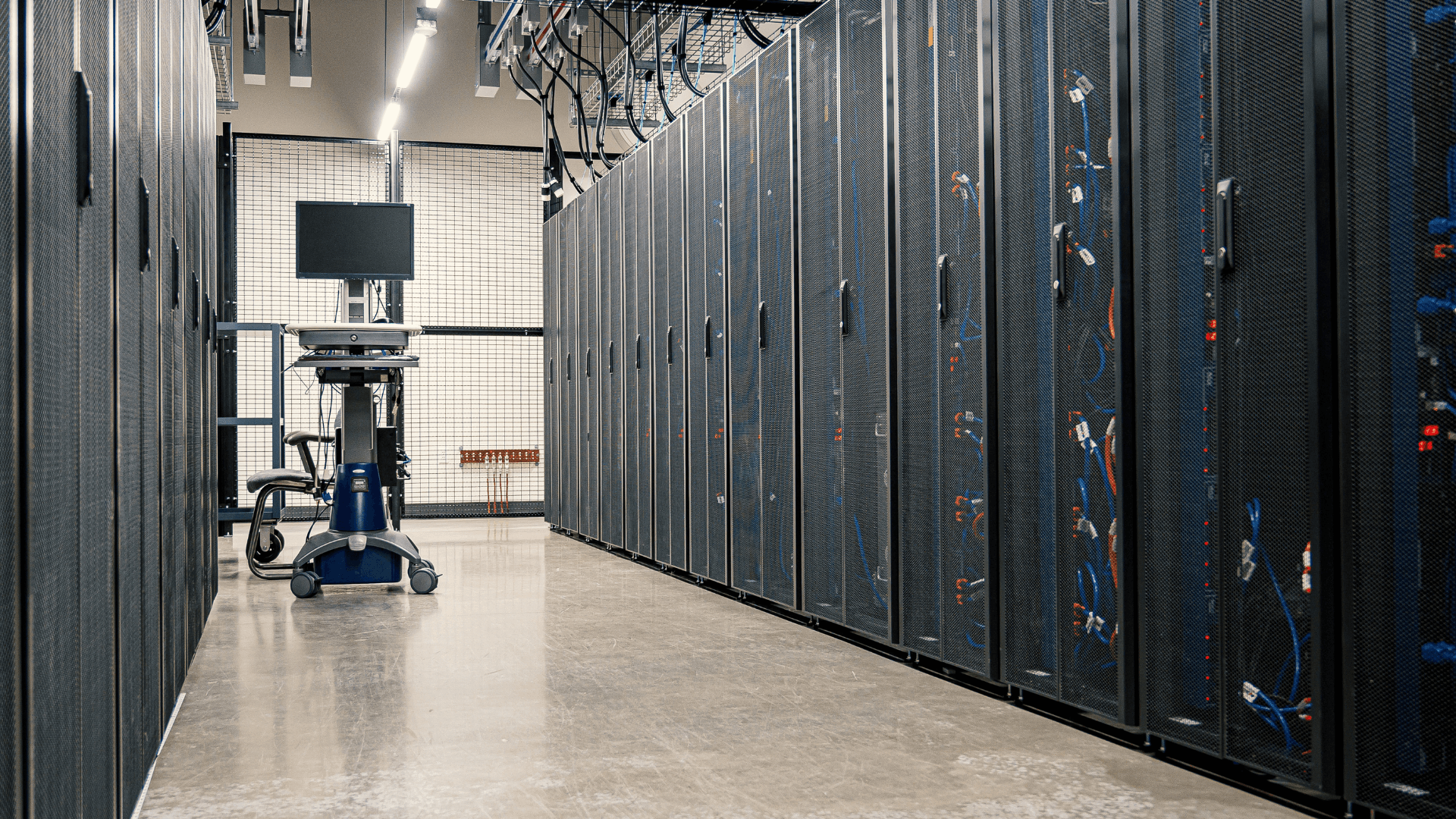
Every app you use, every AI-generated answer, every digital transaction relies on something very physical: servers, processors, storage devices, power supply, and cooling systems. These live in data centres—secure facilities built to store data and run applications reliably, 24/7.
“When we say cloud,” Adil noted, “we just mean that it’s located somewhere that you, as a user, don’t need to know about.” That “somewhere” could be Nairobi, Kisumu, Lagos, London, or New York. The location matters far more than most people realise—especially once AI enters the picture.
AI systems, whether predictive models or large language models, demand enormous computing power and vast datasets. That means more servers, more specialised processors, more electricity, and more heat to manage. In short, AI needs a home, and that home is the data centre.
Cassava Technologies and Africa Data Centres: an African story
For many in East Africa, Adil is a familiar figure from his time under the Liquid Telecom banner. Today, Liquid Intelligent Technologies sits alongside cloud, cybersecurity, fintech, and data centres within Cassava Technologies, a pan-African technology group founded by Zimbabwean entrepreneur Strive Masiyiwa.
Cassava operates in over 20 African countries. Its fibre network alone spans roughly 120,000 kilometres across 12 countries, making it the largest in sub-Saharan Africa. Africa Data Centres, one of Cassava’s key businesses, focuses specifically on building and operating large-scale, carrier-neutral data centres across the continent.
Currently, Africa Data Centres runs more than 30 megawatts of capacity across Kenya, South Africa, and Nigeria, with Kenya being its leading market. While these numbers may sound modest compared to hyperscale facilities in the US or Europe, they represent some of the most advanced digital infrastructure on the continent.
AI sovereignty and why location matters
A recurring theme in global AI debates—especially at forums like the United Nations—is sovereignty. Who owns the data? Where is it stored? Who has jurisdiction over it?
For countries in the global south, this is not an abstract concern. AI systems trained on local data—health records, educational outcomes, financial behaviour, national security information—carry immense strategic value. Housing that data entirely outside national borders creates vulnerabilities, from privacy breaches to geopolitical pressure.
Adil was unequivocal: “AI will define everything we do in our lives—from education to health to defence.” Given that reality, governments and industries must decide which data and applications must remain within their borders and which can safely be hosted elsewhere.
Africa Data Centres’ position is that Africa must build enough digital infrastructure—data centres, networks, and services—to give itself real choices. Sovereignty, in this sense, is not about isolation but about control and optionality.
Why Africa lags behind on data centres
If data centres are so critical, why hasn’t Africa built them at scale?
The answer, unsurprisingly, comes down to capital. Building data centres is expensive. A single megawatt of capacity costs between USD 10–12 million to deploy. That figure excludes the additional investment required for power redundancy, fibre connectivity, security, and specialised cooling.
In regions like the US, Europe, or parts of Asia, investors talk in terms of hundreds of megawatts or even gigawatts. Africa is still operating in tens of megawatts.
But money is only one part of the story. Data centres don’t exist in isolation; they are part of an ecosystem. Investors need confidence that demand will follow—demand from enterprises, governments, startups, and cloud providers. Without sufficient local consumption of digital services, infrastructure alone won’t scale.
As Adil put it, “If there is demand, capital will come.”
GPUs, TPUs, and why they matter
Over the last few years, headlines have been filled with talk of chip shortages, Nvidia GPUs, and AI accelerators. For many people, these terms remain opaque.
At a basic level, AI systems require compute—the ability to process massive numbers of instructions quickly. Traditional CPUs struggle with the parallel workloads AI demands. GPUs (Graphics Processing Units) and TPUs (Tensor Processing Units) are designed specifically for this kind of heavy lifting.
These chips are now one of the most expensive components of AI infrastructure. They also consume significant power and generate intense heat, placing new demands on data centre design.
Africa is not absent from this space. Cassava Technologies has partnered with Nvidia to deploy what Adil describes as the continent’s first large-scale AI factory—a facility hosting thousands of cutting-edge GPUs. Kenya is part of the next wave of these deployments, alongside Nigeria, Egypt, and Morocco.
From generative AI to agentic and physical AI
The AI conversation itself is evolving rapidly. Generative AI, powered by large language models, is already familiar to many users. These systems predict outputs—words, images, code—based on vast amounts of data.
Agentic AI takes this a step further. Instead of simply responding, these systems act. They make autonomous decisions: adjusting temperatures, rerouting logistics, approving transactions, or triggering workflows without human intervention.
The next frontier is physical or material AI—robots, autonomous machines, and humanoids that combine perception, decision-making, and physical action. All of these technologies still rely on central AI “factories” housed in data centres, connected by high-speed networks.
Each leap forward increases pressure on infrastructure: more power, more cooling, more resilience.
Sustainability: challenge and opportunity
Data centres are energy-hungry, and AI only intensifies that reality. Managing heat, reducing emissions, and ensuring long-term viability are no longer optional considerations.
Here, Africa holds a unique advantage. Many countries enjoy abundant renewable energy—solar, hydro, wind, and geothermal. Kenya, for example, generates over 94–95% of its grid power from renewable sources, largely geothermal and hydro.
Africa Data Centres’ Nairobi facility draws about 20% of its power from on-site and nearby solar installations, on top of the green national grid. For global customers with sustainability targets, this makes Kenya—and Africa more broadly—an increasingly attractive destination.
Still, sustainability alone does not guarantee investment. Power must also be reliable, affordable, and scalable.
Beyond banking: where AI adoption is growing
Financial services have led AI adoption in Africa, particularly in fraud detection, risk assessment, and customer service. Banks and insurers have both the data and the capital to invest early.
But Adil sees momentum building elsewhere. Education is one major area, with AI-powered tutoring offering a way to scale quality learning at lower cost. Healthcare is another, where AI can assist with diagnostics, treatment planning, and resource allocation—augmenting, rather than replacing, medical professionals.
There are also less visible but highly strategic applications in defence and national security, where AI offers clear advantages but demands strict data control.
What businesses should look for in an AI infrastructure partner
For business leaders exploring AI and data centre partnerships, Adil emphasised three priorities.
First is trust. Data centres house an organisation’s most sensitive data and applications. Experience, track record, and security standards matter deeply.
Second is holistic thinking. Infrastructure should support business outcomes, not exist for its own sake. Whether the goal is cost reduction, better customer experience, or new products, the technology stack must align with strategy.
Third is flexibility. Not every workload belongs on-premise, and not everything should go to the public cloud. Hybrid approaches—mixing local data centres with cloud services—are often the most practical.
A note to policymakers
Adil was careful not to posture as a policy adviser, acknowledging that African governments already have long-term technology plans. Still, he outlined three pillars that will determine AI success on the continent:
- Competitive power costs, supported by reliable and renewable energy.
- Affordable, resilient connectivity, including fibre networks protected from vandalism and disruption.
- Data generation, driven by digitisation across health, education, transport, media, and public services.
Without data, AI cannot deliver value. With it, algorithms can help make roads safer, hospitals more effective, schools more inclusive, and governments more responsive.
The quiet work that enables everything else
AI often grabs attention through flashy demos and bold predictions. Data centres rarely do. Yet, as this conversation made clear, they are the quiet enablers of the AI economy.
If Africa wants AI that reflects its realities, protects its interests, and serves its people, then investing in data centres, networks, and energy is not optional—it is foundational.
AI needs a home. The real question is whether Africa will continue renting that home abroad, or finally start building it for itself.
Report compiled from: National Television’s (NTV) Youtube video
Credits: NTV’s interview, click here to watch